What does it mean to dream about someone dying?
By Nora Bennett ·
Nora Bennett writes Notes on dreaming, the Dreamsay journal on dream science, recall, and what your own history can tell you that a dictionary can't.
Dreaming of someone dying usually reads as change rather than loss: a relationship, a season, or a version of your life being rewritten. Dreams of people who have already died are one of the most common experiences in bereavement, and most are comforting rather than disturbing. No dream predicts an actual death.
That’s the short answer. The longer one is more interesting, because death is the dream theme with the worst reputation and one of the longest guest lists.
How common are dreams about death?
Common enough that researchers file them under “typical”. Since the 55-item Typical Dreams Questionnaire was given to 1,181 university students in Canada in 2003, the death of a family member has been a standard item on the list of themes ordinary people report having dreamed. When German researchers replicated the study a year later with 444 participants, the themes kept their ranks almost perfectly: the same images, in close to the same order, in a different country and language. Whatever culture is doing to dreams, it is not doing much to this one.
The numbers move into majorities when the dream involves someone who has actually died. In a 2014 survey of 278 bereaved adults, contacted through hospice bereavement programs, 58% reported dreaming of their deceased loved one. Not a fringe experience, not a curse: most people who lose someone will meet them again in their sleep.
So the omen with the grimmest reputation turns out to be one of the most widely shared dreams on record. If death dreams foretold deaths, humanity would have foreseen its entire calendar several times over by now.
What do dreams of the dead actually feel like?
Here the research keeps refusing to cooperate with the fear. In the same 2014 survey, most dreams of the deceased were described as pleasant, or as a mix of pleasant and disturbing; purely disturbing dreams were uncommon. The recurring scenes were ordinary and warm: happy memories, the person healthy again, the person at peace. Sixty percent of the dreamers believed the dreams had influenced their grieving, and the influence they named was toward acceptance and comfort.
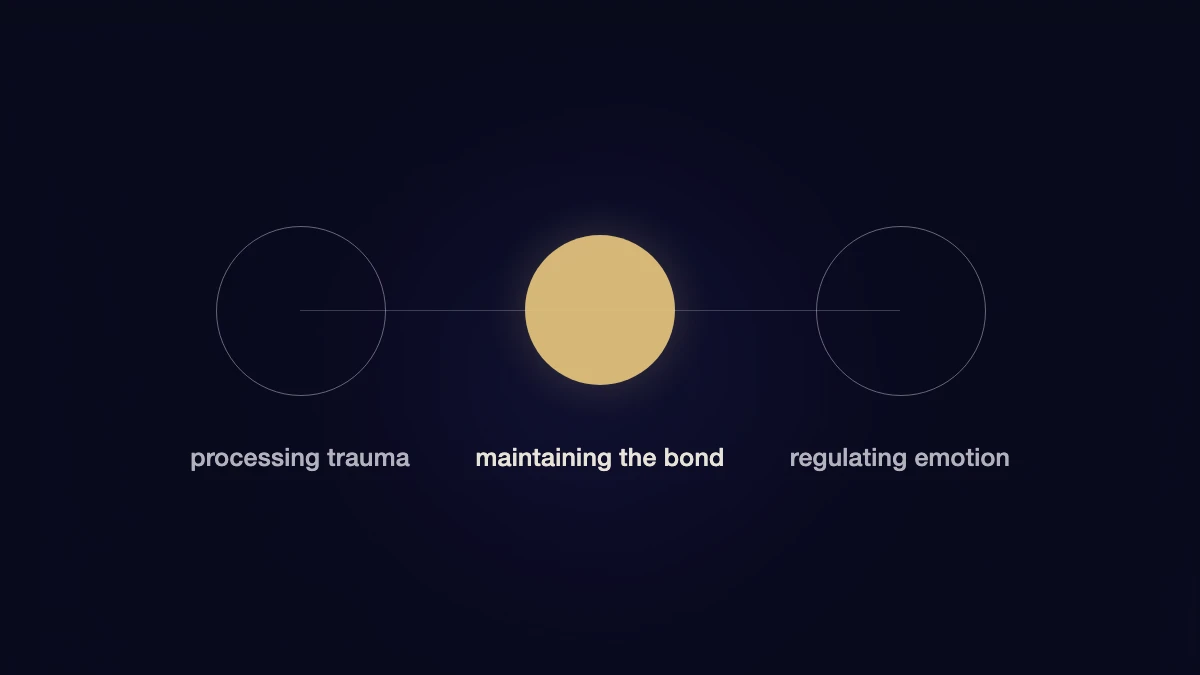
A 2020 study of 216 people who had lost a romantic partner proposed that dreams of the dead do three kinds of work: they process what was traumatic about the death, they keep a bond alive, and they help steady the dreamer’s emotions. All three found support in the data. A 2026 systematic review of 110 publications reached the same conclusion from a wider angle: across cultures, dreams of the deceased most often carry comfort, guidance, and a sense of continued connection.
The honest summary is that research reads these dreams as memory and attachment doing their overnight work. Not a visit. Not a message from the other side. A person you loved remains a person your mind keeps on file, and at night it returns to the file.
What readings recur across cultures?
Across traditions, a handful of readings come back again and again, not as verdicts but as candidates to test against your own life.
| Tradition | The death dream tends to stand for |
|---|---|
| Modern grief research | A continuing bond: the deceased appearing because memory and attachment keep working overnight, most often with comfort |
| East Asian folk reversal | The opposite of the dream: a death dream read as long life for the person dreamed of, a blessing in disguise |
| Freudian reading | A substitute: the dying person standing in for a feeling, or a situation, the dreamer would rather not name directly |
| Jungian reading | An ending: a phase, a role, or a version of the dreamer’s life being laid down so the next one can begin |
| Western folk omen | A premonition of an actual death. There is no evidence for this, and the dream is far too common to be an omen |
Read the column top to bottom and the same night’s dream is a bond, a blessing, a substitute, an ending, and a warning. None of these is the meaning. They are the recurring suspects. And the dictionary’s failure is never more visible than here, because a death dictionary claims to know who the dying person is to you. Only your history knows that.
Can a death dream be a premonition?
No. There is no evidence that dreams predict events, and the arithmetic settles it on its own: a dream this common, carried by this many dreamers across this many centuries, would have produced a run of accurate prophecies no one could miss. What feels prophetic is memory’s asymmetry. The one dream that seemed to come true is kept for years; the hundreds that meant nothing dissolve by breakfast.
Why the dreaming mind reaches for this particular image at all is less mysterious than it looks. Dream content tracks waking life: the concerns, the fears, the changes of the day. When something in your week feels like it is ending, the mind owns no stronger image for ending than death, so it reaches for the strongest one it has. The dream is speaking about the ending. It is not speaking about death.
How do you find what your death dream means?
Skip the dream dictionary and run the comparison the dictionary can’t: your dream against your life, across time.
- Date it. Write the dream down on waking, in as much detail as you can keep: who was dying, whether you knew it inside the dream, and above all how you felt in the first minute. Dread, relief, guilt, and calm point in different directions, and the feeling is the most trustworthy thing a dream carries.
- Note the week, not just the night. What arrived around that date? A change being put off, a relationship cooling, a move, a job ending, someone you love suddenly far away.
- Ask person or symbol. Someone alive dying in the dream is usually about the bond, not the body: what is changing between you. Your own death tends to be about an ending already underway, a version of your life being closed out.
- If the dream is about someone who has died, date the returns. Anniversaries, birthdays, a song, a season that rhymes with the loss. The pattern of the returns tells you what the bond is still holding, and most of what it holds is comfort.
- Wait for the second one. A single death dream is weather. Two or three, each landing in the same kind of week, are a recurring dream, and the pattern across them is yours, not the species’.
This is the quiet argument for keeping a dream journal of any kind: a death dream fades fast on waking, and it takes its details with it, precisely the details that would tell you what it was about. This is why Dreamsay lets you speak the dream the moment your eyes open and transcribes it on the device in your hand. Your voice never leaves your device. The record stays yours, and so is the reading it eventually allows.
When is it more than a dream?
If these dreams follow a loss that is still fresh, or arrive night after night and break your sleep, those are matters for waking life: the people around you, or a professional. The dream was the messenger, not the problem.
And if you dreamed of someone dying and woke up needing it to mean nothing, start there. Check the week, not the dictionary. The fear is old and the image is strong, but the reading was always going to live in your own record, which is the one place it was always going to be safe to look.
Common questions
Does dreaming about someone dying mean death is coming?
No. There is no evidence that dreams predict events, and death dreams are far too common to be omens. They are a standard theme in surveys of ordinary dreamers across cultures, and researchers read them as pictures of present experience: a change underway, a fear being processed, not a preview of the future.
What does it mean when you dream about your own death?
Usually an ending that is already underway: a job, a season, a version of your life being closed out. Dream content is found to track waking concerns, and your own death is the strongest image of ending the dreaming mind owns. It is a picture of something finishing, not a forecast.
What does it mean when you dream about someone who has died?
This is one of the most common experiences in bereavement. In a 2014 survey of 278 bereaved adults, 58% reported dreams of the deceased, and most described them as pleasant or mixed. Research reads them as memory and attachment continuing their work overnight, not a visit: the person appears because they live in your memory.
Is it bad luck to dream about death?
No evidence supports dreams as omens, and some traditions read the dream the other way around: in East Asian folk belief, dreaming of death means long life for the person dreamed of. The dread on waking is real. The forecast is not.
Why do I keep dreaming about the same person dying?
Repetition usually means the dream's occasion keeps recurring. A repeating death dream is worth dating: many people find it clusters around the same kind of week, a change being put off, a relationship under strain, a season ending. The pattern across dated dreams says more than any single night.
Sources
- Nielsen, Zadra, Simard, Saucier, Stenstrom, Smith & Kuiken (2003), The Typical Dreams of Canadian University Students, Dreaming 13(4), 211–235
- Schredl, Ciric, Götz & Wittmann (2004), Typical Dreams: Stability and Gender Differences, The Journal of Psychology 138(6), 485–494
- Wright, Kerr, Doroszczuk, Kuszczak, Hang & Luczkiewicz (2014), The Impact of Dreams of the Deceased on Bereavement: A Survey of Hospice Caregivers, American Journal of Hospice & Palliative Care 31(2), 132–138
- Black, Belicki, Piro & Hughes (2020), Comforting Versus Distressing Dreams of the Deceased: Relations to Grief, Trauma, Attachment, Continuing Bonds, and Post-Dream Reactions, Omega 84(2), 525–550
- Mamat, Owaisi, Alrai, Goktepe, White, Bayley & Elzamzamy (2026), Dreams of the Deceased: A Scoping and Mixed-Methods Systematic Review, Sleep Medicine 140
Keep reading
What does it mean to dream about water?
Water dreams are rarely one symbol. What research says about swimming, floods, and tidal waves, the readings that recur across cultures, and how to find yours.
Why did I dream about my ex?
Dreams about an ex are common, sometimes years later. What the research actually says, the readings that recur, and how to find what yours is about.
What does it mean to dream about snakes?
Snake dreams are one of the oldest, most cross-cultural dream images. What research says, the readings that recur across cultures, and how to find yours.
Dreamsay readings — and these notes — are for entertainment and personal reflection, not medical or psychological advice.